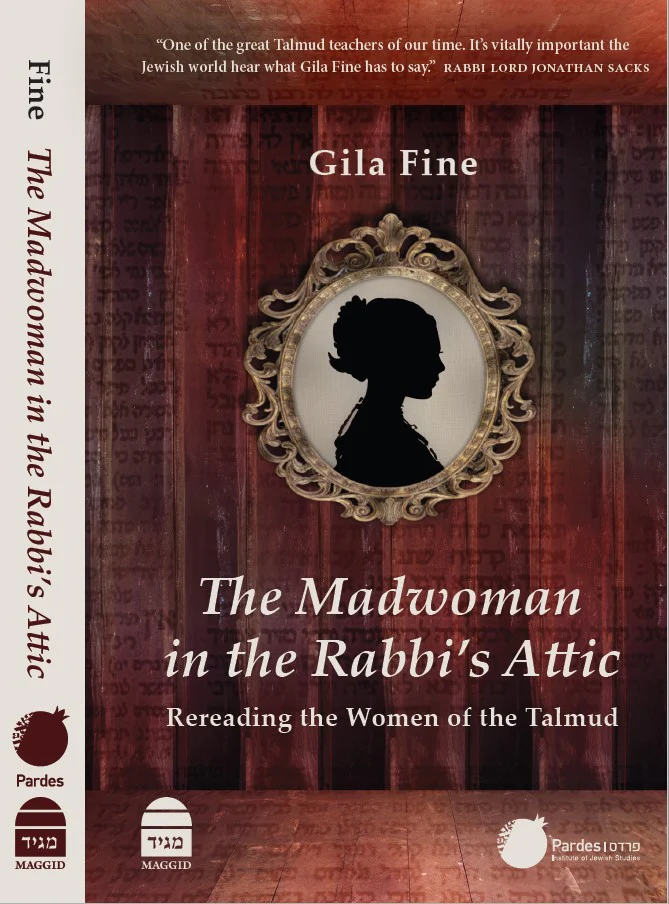
The Madwoman in the Rabbi's Attic
Gila Fine
Women in the Talmud are generally marginal and almost always anonymous –
the daughters, sisters, and wives of prominent rabbis. The Madwoman in the
Rabbi’s Attic explores the stories of the exceptions, the six named heroines of
the Talmud: Yalta the shrew, Homa the femme fatale, Marta the prima donna,
Heruta the madonna/whore, Beruria the overreacherix, and Ima Shalom the
angel in the house.
As their epithets suggest, every one of these women appears to embody an antifeminist archetype. Yet in each case, a careful rereading reveals that there is a
lot more to the story than initially meets the eye; that the heroine is far more
complex than she first seems; and that the rabbis had rather surprising – so as
not to say proto-feminist – views of marriage, sex, childbirth, and what it means
to be a woman in the world. In presenting us with archetypes that systematically
break down, the Talmud imparts profound moral teachings about how to read
the characters of a text and, ultimately, how to regard the people in our lives.
The Madwoman in the Rabbi's Attic
Gila Fine
Women in the Talmud are generally marginal and almost always anonymous –
the daughters, sisters, and wives of prominent rabbis. The Madwoman in the
Rabbi’s Attic explores the stories of the exceptions, the six named heroines of
the Talmud: Yalta the shrew, Homa the femme fatale, Marta the prima donna,
Heruta the madonna/whore, Beruria the overreacherix, and Ima Shalom the
angel in the house.
As their epithets suggest, every one of these women appears to embody an antifeminist archetype. Yet in each case, a careful rereading reveals that there is a
lot more to the story than initially meets the eye; that the heroine is far more
complex than she first seems; and that the rabbis had rather surprising – so as
not to say proto-feminist – views of marriage, sex, childbirth, and what it means
to be a woman in the world. In presenting us with archetypes that systematically
break down, the Talmud imparts profound moral teachings about how to read
the characters of a text and, ultimately, how to regard the people in our lives.
מידע על המוצר
מידע על המוצר
משלוח והחזרות
משלוח והחזרות
Description
Gila Fine
Women in the Talmud are generally marginal and almost always anonymous –
the daughters, sisters, and wives of prominent rabbis. The Madwoman in the
Rabbi’s Attic explores the stories of the exceptions, the six named heroines of
the Talmud: Yalta the shrew, Homa the femme fatale, Marta the prima donna,
Heruta the madonna/whore, Beruria the overreacherix, and Ima Shalom the
angel in the house.
As their epithets suggest, every one of these women appears to embody an antifeminist archetype. Yet in each case, a careful rereading reveals that there is a
lot more to the story than initially meets the eye; that the heroine is far more
complex than she first seems; and that the rabbis had rather surprising – so as
not to say proto-feminist – views of marriage, sex, childbirth, and what it means
to be a woman in the world. In presenting us with archetypes that systematically
break down, the Talmud imparts profound moral teachings about how to read
the characters of a text and, ultimately, how to regard the people in our lives.